
Forklift Protection Barriers Ontario
Forklift protection barriers Ontario facilities install are heavier rail and post systems for places where bollards alone will not stop a loaded truck.
Fully licensed and insured
Mon to Fri: 8:00am to 6:00pm · Saturday: 9:00am to 2:00pm · Sunday: Closed
Continuous protection for busy aisles
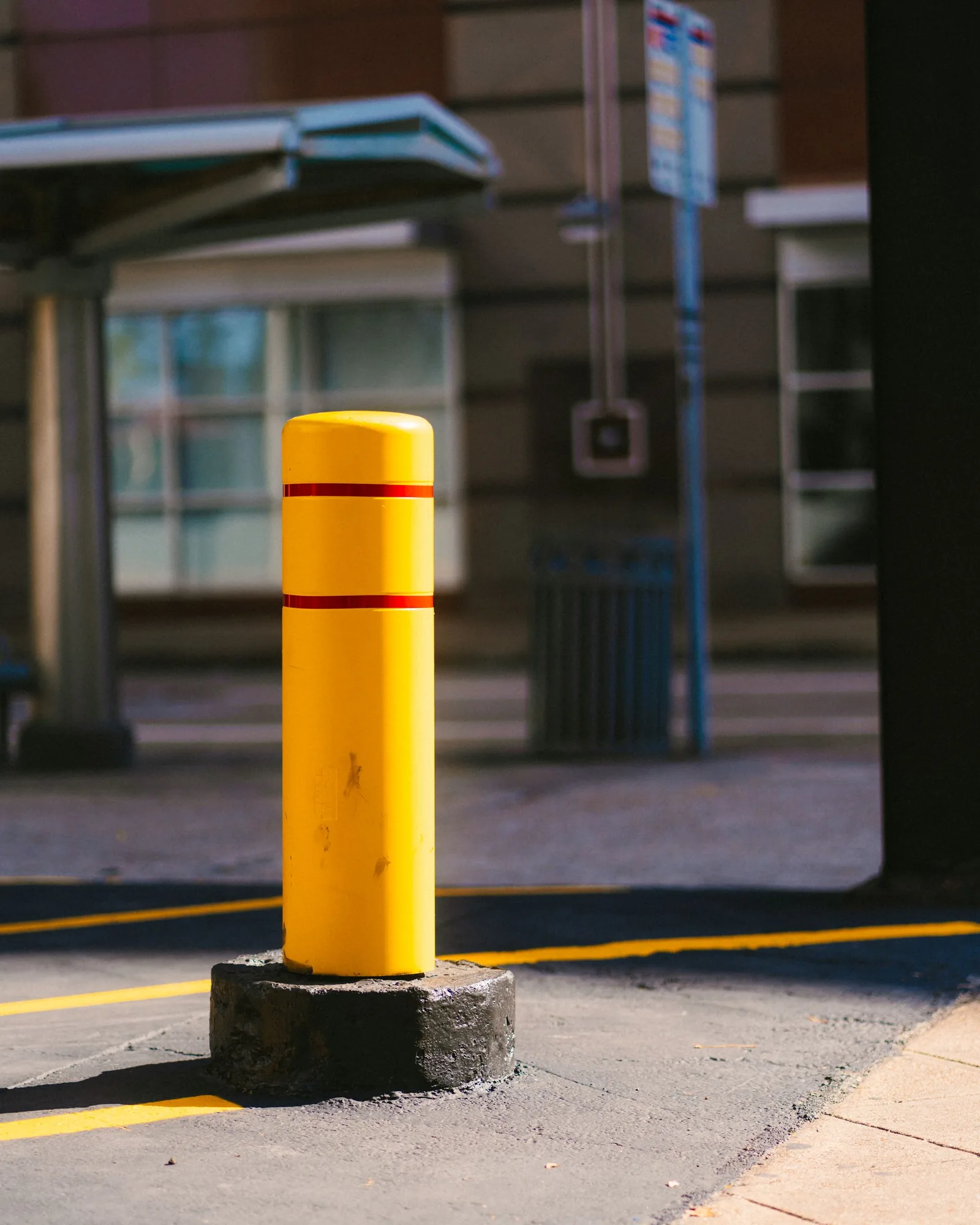
Where traffic runs along a wall, a rack or an equipment line, a row of posts leaves gaps. Continuous rail and post systems spread impact along a longer run. We fabricate barriers to your layout and install them with anchors suited to the slab.
Typical uses include rack ends, aisle edges, door openings, walkway separations and corners where forklifts turn. We help you choose between bollards, rail systems and guardrail according to the duty.
Designing around your layout
The best barrier layout starts with where the trucks actually travel. We look at turning radii, aisle widths, rack heights, door positions and pedestrian crossings, and place barriers so protection is where impacts happen without blocking the way work is done. Gaps for pedestrians and gates for equipment access are part of the plan.
Barriers are anchored to the slab with fixings suited to the concrete and the load, and finished in galvanizing or safety yellow so they are both durable and easy to see on a busy floor.
Height, posts and anchors
Placement at impact height matters as much as length. Barriers are set where forks, pallets and counterweights actually strike walls, doors, racking or equipment, and the damage already on your walls shows where that is.
Heavy posts and rails are selected for repeated low-speed impacts: HSS posts, pipe bollards, guardrails and base plates. Light handrail tubing will not survive forklift contact. Anchors matter too. A barrier needs enough concrete thickness and edge distance for its anchors to hold, because a strong rail on weak anchors simply transfers the failure to the floor.
Questions worth asking any supplier
- What slab thickness and edge distance do the anchors need?
- Will pallet flow, dock doors, electrical panels and maintenance routes stay open?
- Is the barrier at the height where forks and counterweights really hit?
- Which finish suits a wet or salted floor: galvanized or safety yellow?
- Can the work be done around operations?
Frequently asked questions
Do I need a barrier or a bollard?
Bollards suit point protection. Rails suit longer runs. We help match the product to the traffic and layout.
Request a quote
Tell us what you need and we will get back to you. In a hurry? Calling is fastest.